

2024–
AURA
AURA (Autonomous Upskilling with Retrieval-Augmented Agents) uses retrieval-augmented LLM agents to iteratively generate reward terms, domain randomizations, and training configs for curriculum reinforcement learning, replacing the manual reward- and curriculum-tuning loop with an agentic one.
Generated configs are expressed as YAML against a fixed schema and statically verified before being handed to the training loop, so an agent's proposal either compiles into a valid curriculum stage or is rejected and retried — the LLM never touches the simulator directly.
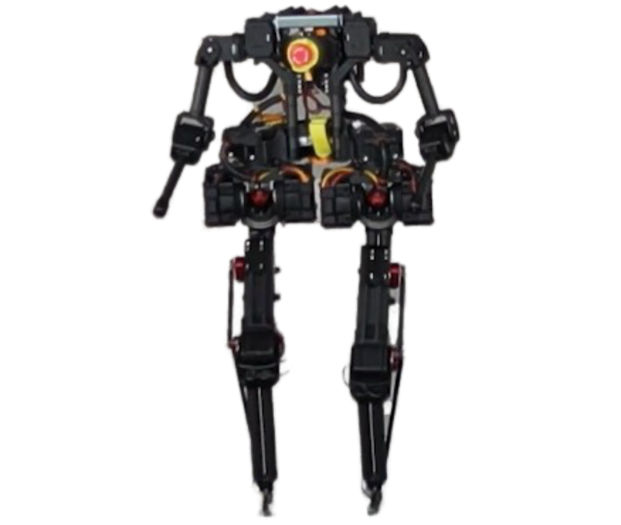
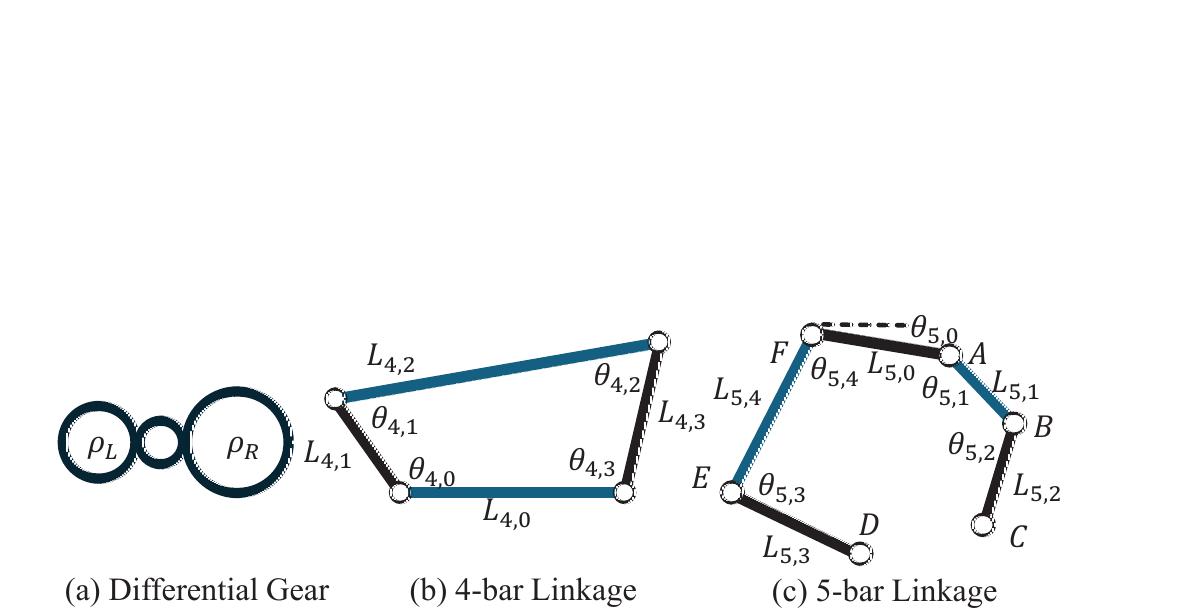
The platform is BRUCE, a kid-sized humanoid with three distinct parallel mechanisms in its legs (a cable-driven differential pulley, a 5-bar linkage, and a 4-bar linkage). We simulate all three closed kinematic chains natively in GPU-accelerated MuJoCo MJX, so policies are trained directly in the hardware's actuator space and deployed zero-shot.
Research focus
- Retrieval-augmented curriculum agents
- MuJoCo MJX / GPU-accelerated RL
- Closed-chain parallel actuation
- Zero-shot sim-to-real
Project story
Images and demonstrations
13 media items
01 / AURA & the learning platform
The agentic curriculum framework, the robot, and the simulation infrastructure it runs on.
 01
01BRUCE robot rendering
Documentation 02
02BRUCE reinforcement learning
Documentation02 / Parallel mechanisms
Simulating BRUCE's differential pulley, 4-bar, and 5-bar closed-chain linkages natively in MJX.
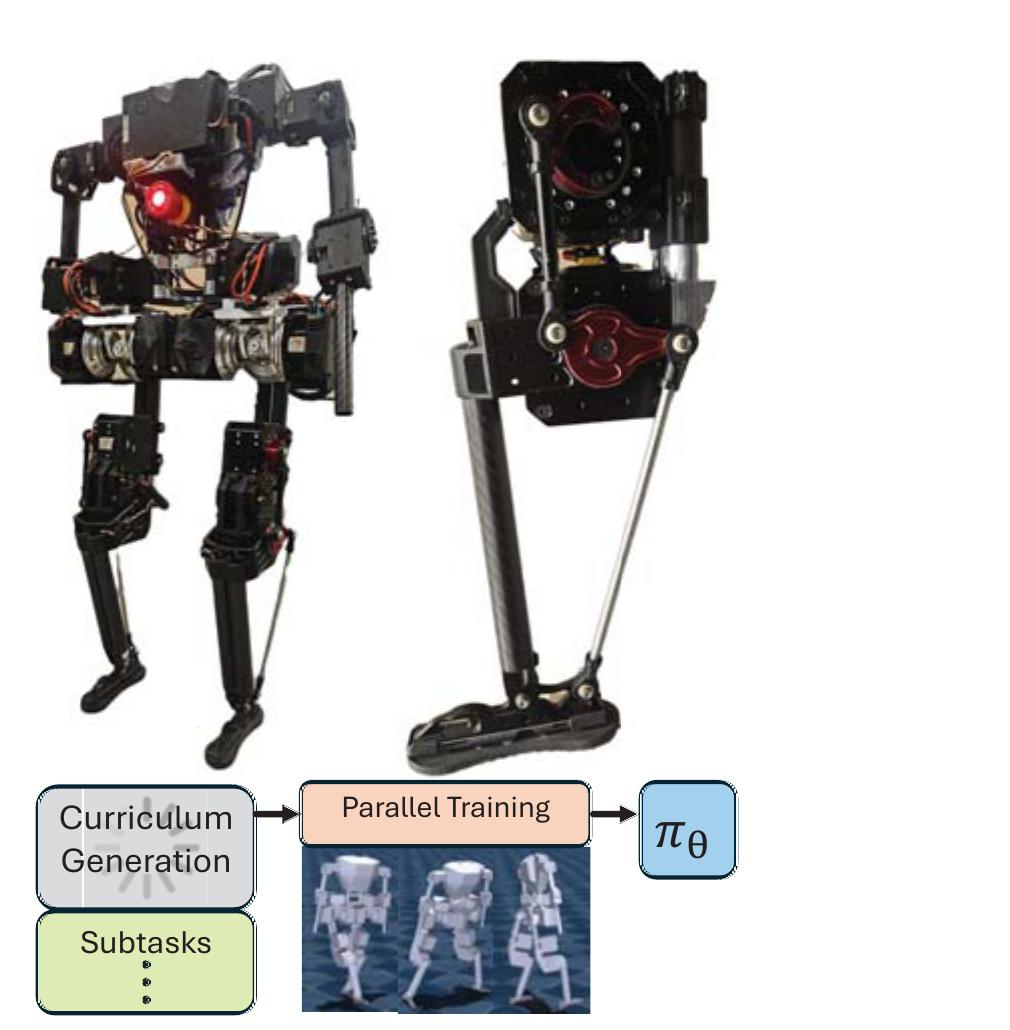
BRUCE's three parallel mechanisms, simulated natively, with an RL policy deployed zero-shot to hardware.
 01
01Parallel mechanism topology
General topology of BRUCE's three parallel mechanisms: differential gear, 4-bar linkage, and 5-bar linkage.
Documentation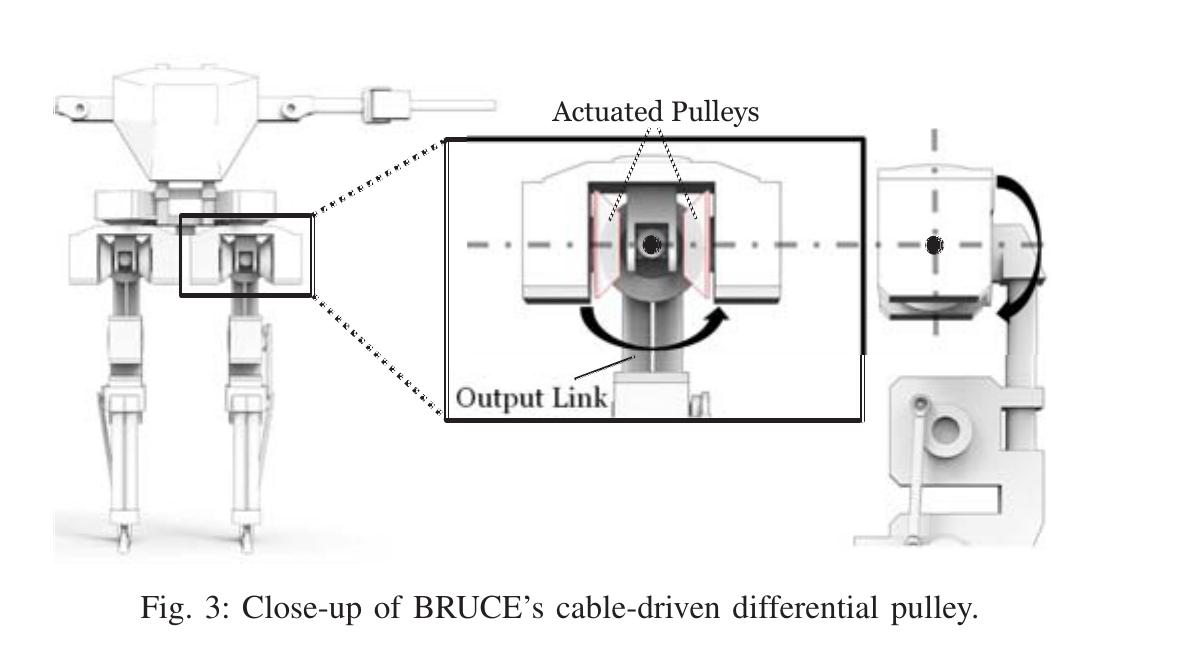 02
02Cable-driven differential pulley
Documentation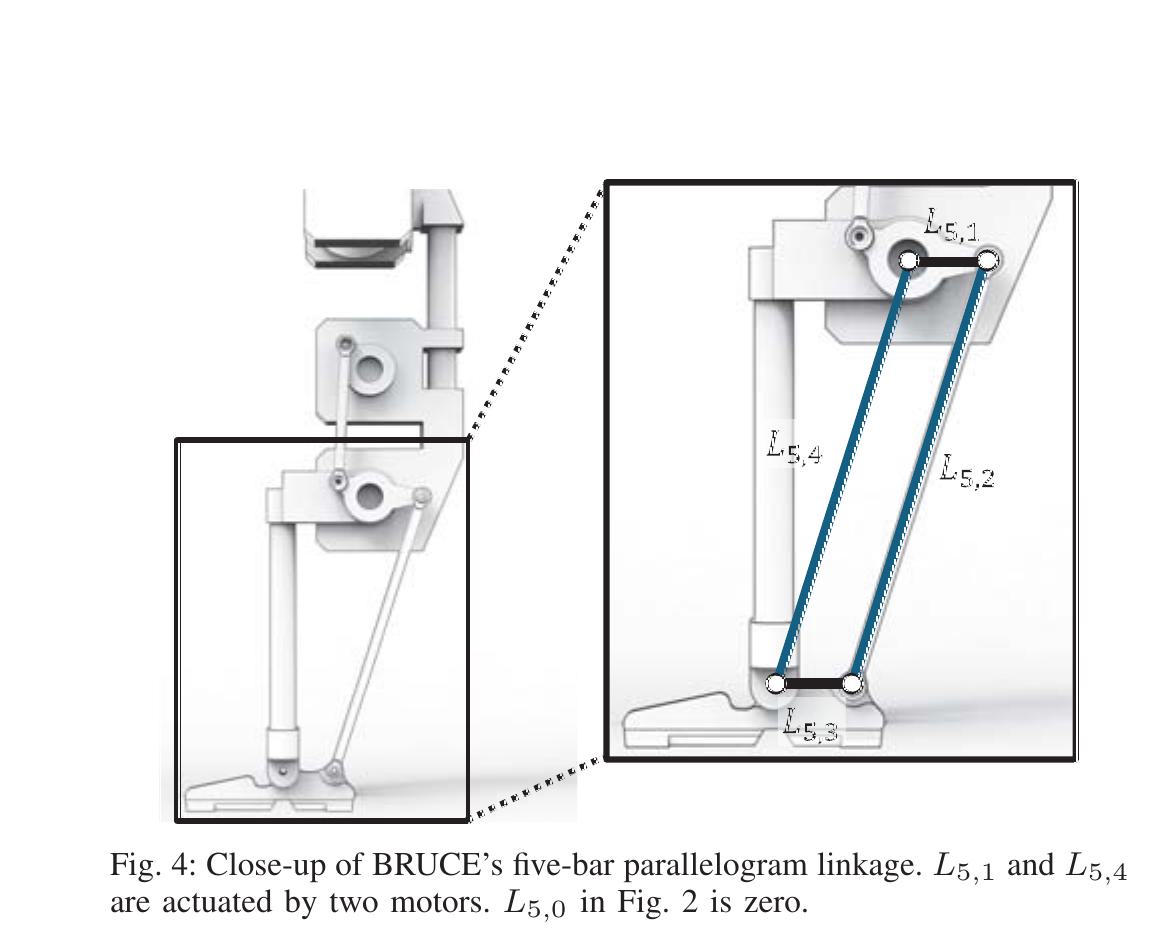 03
035-bar parallelogram linkage
Documentation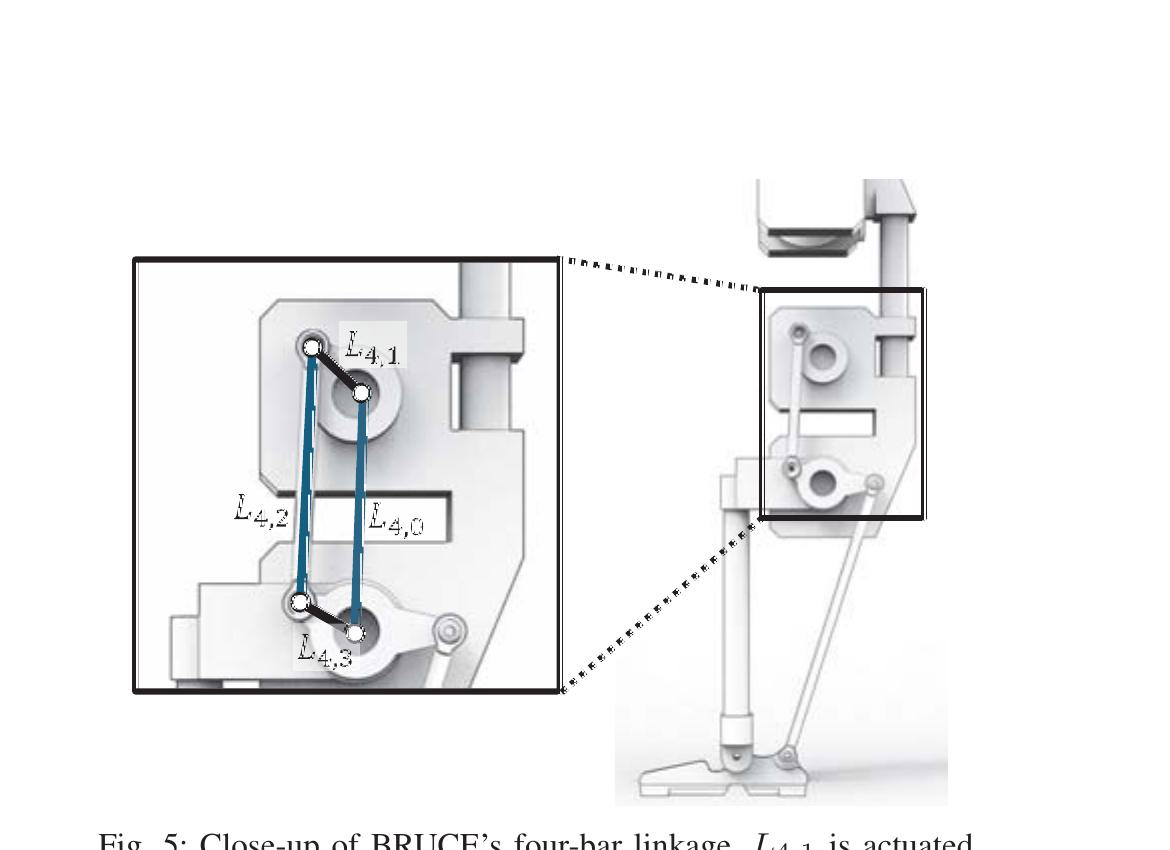 04
044-bar linkage close-up
Documentation03 / Curriculum & sim-to-sim
Progressive training stages, validated through sim-to-sim transfer before hardware deployment.
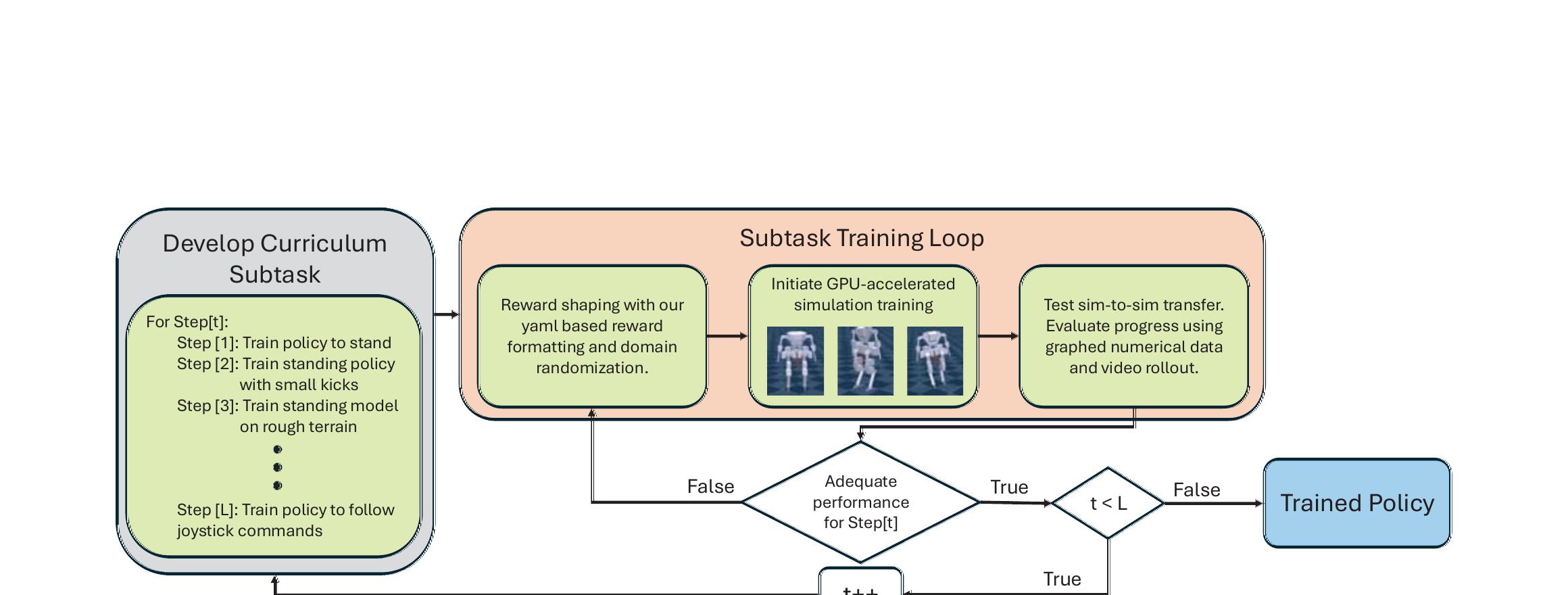
Multi-stage curriculum: reward shaping, GPU-accelerated training, and sim-to-sim evaluation before promotion to the next stage.
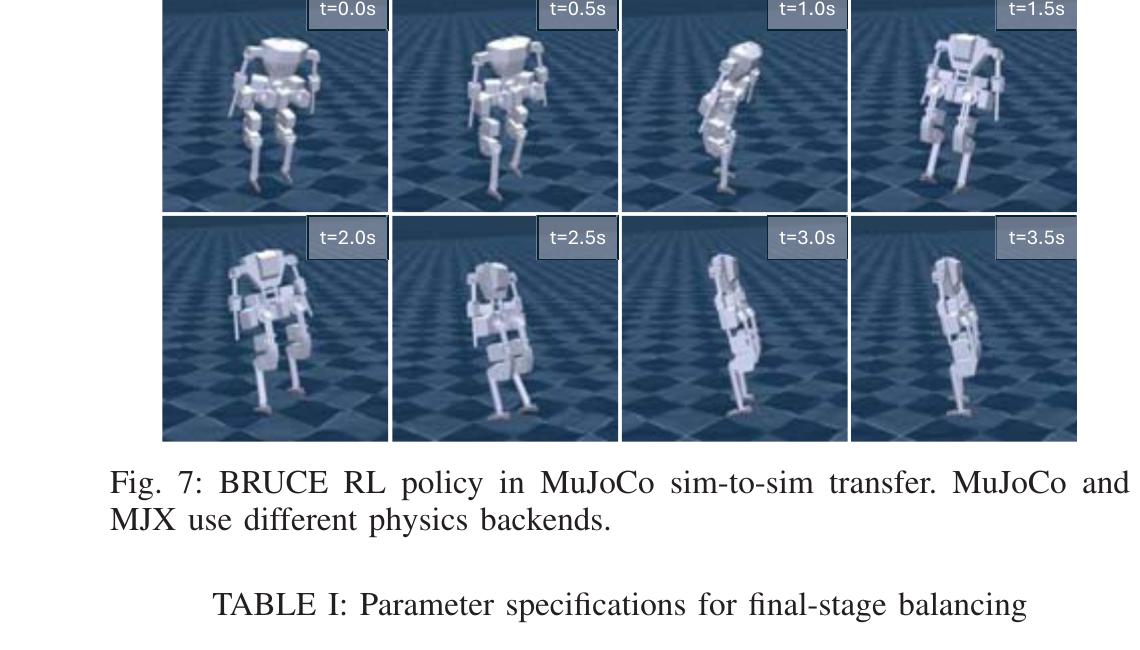 01
01Sim-to-sim policy transfer
Documentation04 / Hardware validation
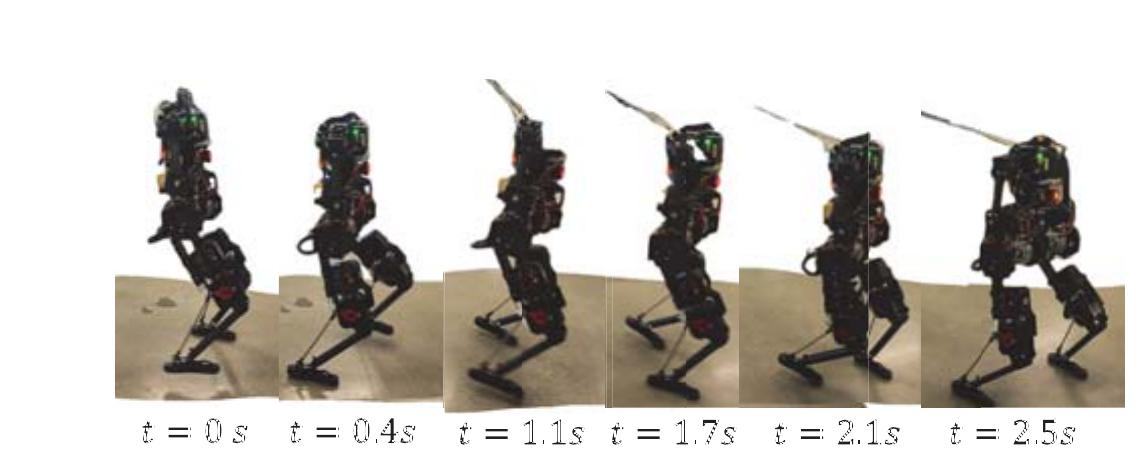
Zero-shot deployment: disturbance rejection and locomotion across surfaces.
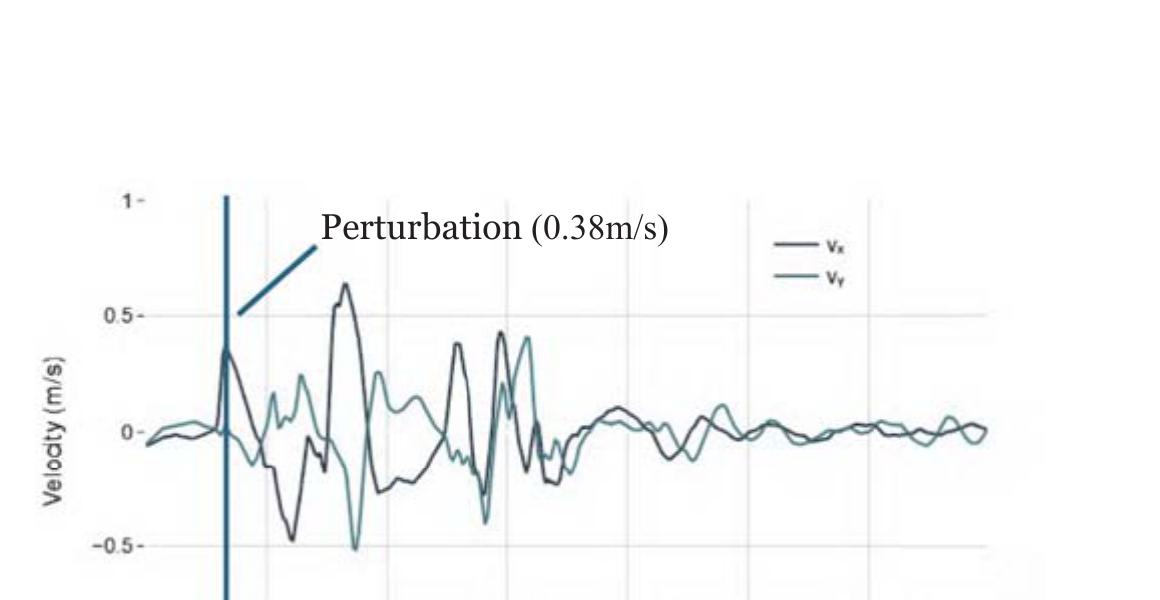
Linear velocity odometry after a 0.38 m/s push from standstill — the policy stabilizes within seconds.
 01
01Walking on slippery concrete
Documentation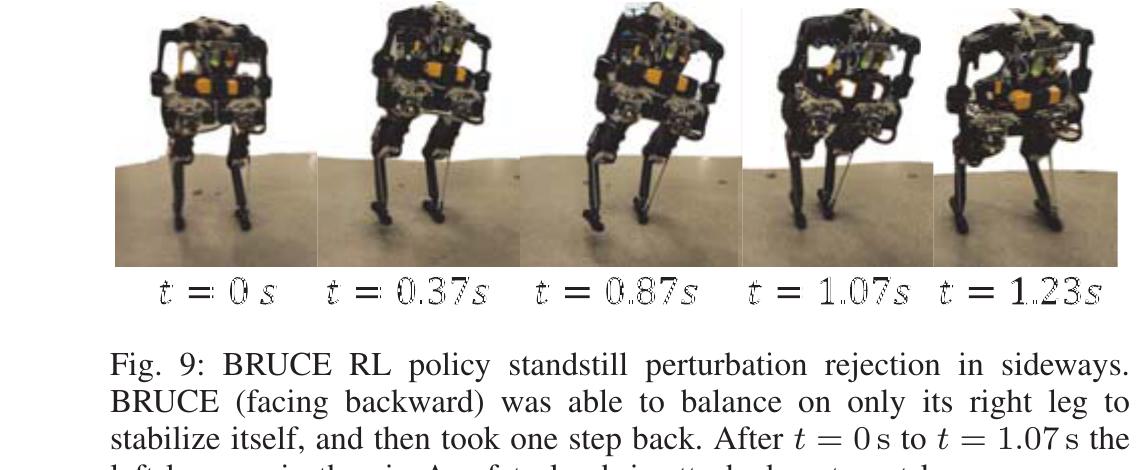 02
02Stand-still perturbation rejection
BRUCE balances on one leg after a sideways push, then steps back to recover.
DocumentationKey characteristics
Retrieval-augmented generation
Agents retrieve prior configs and results to inform new reward, randomization, and curriculum proposals.
Schema-verified YAML configs
Every agent proposal is checked against a fixed schema before it reaches the training loop — invalid configs are rejected and retried, not run.
Closed-chain parallel actuation
All three of BRUCE's parallel mechanisms are simulated as true closed kinematic chains in MJX, not simplified serial approximations.
Zero-shot hardware transfer
Policies trained end-to-end in the hardware's actuator space deploy to BRUCE without fine-tuning.
Publications & related research
AURA: Autonomous Upskilling with Retrieval-Augmented Agents (ICRA 2026) →Mechanical Intelligence-Aware Curriculum RL (Humanoid 2025) →BRUCE position-control RL report (PDF) →